


Delivering Defence Hardware Systems at the Speed of Relevance
For decades, defence computing architectures were largely designed around transporting information back to command centres for processing and decision-making. Increasingly, that assumption no longer holds. Modern defence platforms are expected to process, interpret and act on information much closer to where it is generated, often within highly contested and bandwidth-constrained environments.
This shift is not being driven by a single technology. It is the result of autonomous systems, counter-UAS capabilities, AI-enabled decision support, distributed sensing and multi-domain operations becoming operational realities rather than future aspirations. Every unmanned platform, remote sensor and mobile command post represents another node generating data that must be processed, fused and acted upon in real time.
Programmes such as Microsoft’s Detached Military Cloud reflect the growing requirement to maintain cloud-native capabilities even when disconnected from strategic networks. Similarly, developments in software-defined tactical networking from Cisco and Nokia demonstrate how defence communications are evolving towards more distributed and resilient architectures. Together, these developments point towards the same engineering challenge: determining where processing should occur rather than simply how quickly information can be transmitted.
These themes were evident throughout CANSEC and Eurosatory 2026 and are reinforced by the UK’s new Defence Investment Plan (DIP), alongside Canada’s Defence Industrial Strategy (DIS), Australia’s Defence Industry Development Strategy and similar initiatives across allied nations. While each reflects different national priorities, they all recognise that accelerating defence capability depends upon stronger industrial partnerships, resilient supply chains and the ability to integrate technology into operational service more rapidly.
The Engineering Challenge has Shifted
The widespread deployment of autonomous systems has fundamentally changed the engineering requirements of defence platforms. The challenge is no longer designing hardware for individual assets but enabling highly connected systems capable of processing and sharing information across increasingly distributed operational environments.
Counter-UAS illustrates this well. Modern systems can combine radar, RF, EO/IR and acoustic sensing to detect, classify and respond to threats within seconds. Technologies from organisations such as Teledyne FLIR and Sonardyne continue to increase the volume, fidelity and variety of sensor data available to operators. The engineering challenge, therefore, becomes less about collecting information and more about processing and correlating multiple sensor streams quickly enough to support operational decision-making.
This is changing how defence hardware is architected. Rather than selecting a single processing technology, engineers are increasingly combining CPUs, GPUs and FPGAs to match different workloads across AI inference, sensor fusion, radar processing, sonar classification, electronic support measures and real-time visualisation. Competitive advantage is no longer determined by processor performance alone, but by selecting the right processing architecture for each operational requirement.
Processing at the Tactical Edge
The rapid growth in sensing capability is creating another important engineering constraint. Sensor performance continues to improve, yet communications bandwidth has not increased at the same rate. In many operational environments, transmitting growing volumes of raw data is simply impractical.
Increasingly, valuable information must be extracted where it is generated. AI inference, sensor fusion and real-time analytics are therefore moving towards the tactical edge, reducing latency while improving operational resilience and reducing dependence on persistent connectivity.
This requires far more than additional processing performance. Defence hardware architectures must integrate computing, networking, thermal management, mechanical packaging, cyber resilience and environmental protection into cohesive, deployment-ready systems capable of remaining supportable throughout extended programme lifecycles.
Performance per Watt Is Becoming a Competitive Advantage
As processing capability moves closer to the tactical edge, power is becoming one of the defining engineering constraints.
Mobile command posts, autonomous platforms, counter-UAS deployments and forward operating locations often have limited electrical capacity while also seeking to minimise their logistical and electromagnetic footprint. Increasing compute performance alone is therefore not enough. Future defence hardware architectures must maximise performance per watt, balancing processing capability against power consumption, thermal dissipation, cooling capacity and operational endurance.
Many AI demonstrations perform well within laboratory environments but become significantly more challenging once deployed onto mobile platforms operating within real-world constraints. Engineering deployment-ready hardware, therefore, requires balancing processing performance with power availability, thermal efficiency, environmental resilience, maintainability and future technology insertion from the earliest stages of system design.
Industrial Readiness Is Becoming the Differentiator
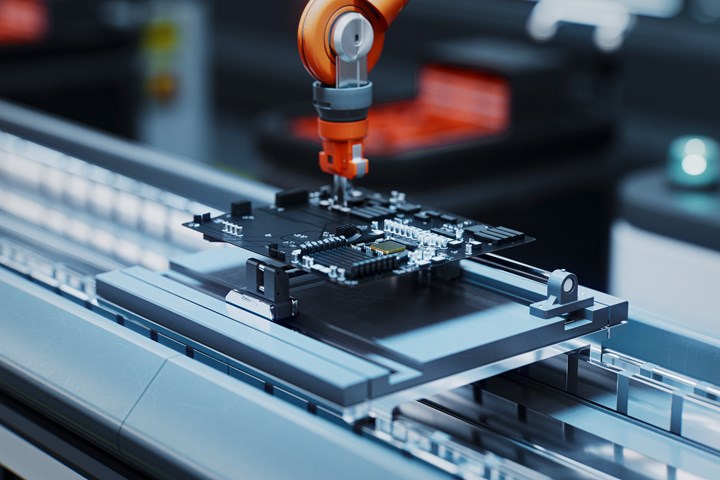
As defence programmes accelerate, engineering capacity and industrial readiness are becoming as important as technological innovation. The ability to qualify, integrate, manufacture and sustain deployment-ready hardware is increasingly determining how quickly new capabilities can transition from development into operational service.
For defence organisations, this places greater emphasis on engineering partners capable of supporting the full lifecycle of a programme, from technology evaluation and systems integration through to manufacturing, qualification and long-term support. As allied nations continue to strengthen sovereign capability and supply chain resilience, organisations that can rapidly transform commercial and defence technologies into deployment-ready hardware systems will play an increasingly important role in delivering operational advantage, both domestically and internationally.
Bridging Innovation and Deployment
The next competitive advantage in defence computing is unlikely to come from faster processors alone. It will come from engineering hardware architectures capable of exploiting advances in autonomous systems, counter-UAS, AI, sensing and communications within genuine operational constraints.
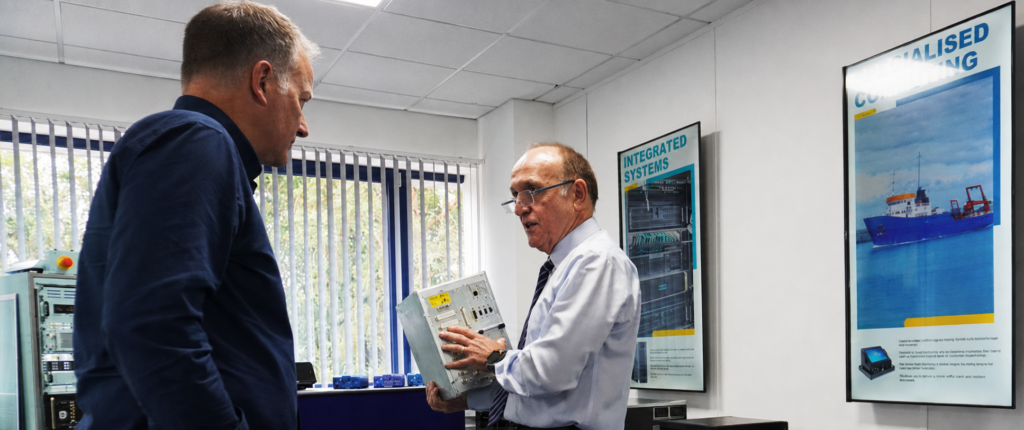
Captec supports defence organisations internationally through the design, engineering, integration and manufacture of deployment-ready hardware systems. From specialised computing and complex integrated systems to electro-mechanical subsystems and the ruggedisation of commercial IT, Captec helps bridge the gap between emerging technologies and operational deployment.
Combining engineering expertise with international manufacturing capability and long-term lifecycle support, Captec helps customers accelerate technology integration, reduce programme risk and strengthen supply chain resilience across demanding defence applications.
Solving Defence Hardware Challenges for Mission-Critical Applications
Discover how Captec supports defence programmes with specialised computing, integrated systems and electro-mechanical subsystems engineered for demanding applications, from advanced processing and platform integration through to deployment and lifecycle support.
Delivering end-to-end, like no one else.
Captec is an award-winning designer, engineer and manufacturer of deployment-ready hardware systems, supporting defence organisations with specialised computing, integrated systems and electro-mechanical subsystems for mission-critical applications.
From modernising existing platforms and integrating advanced technologies to supporting tactical edge computing and long-term lifecycle management, our experienced engineering teams help accelerate capability delivery while reducing programme risk and supporting resilient, operationally ready defence systems.